
Blog
History Blog - Spring 2026
Steven Kenyon - Primary Teaching and Learning Consultant
Developing a Love of History Through Historical Fiction
Tim Jenner, HMI National Lead for History, has stated that reading and stories should be at the centre of school history. Compelling, award-winning historical fiction can not only inspire a love of reading, but it can also immerse children in a detailed study of other times and places.
The Historical Association's Young Quills Historical Fiction competition is held annually, both to recognise good historical fiction writing and to encourage children to develop a love of history and a feel for the period they are studying. Authors, who write historical fiction, and do it well, should be acknowledged and promoted within the primary classroom. They can help to capture the imagination of young audiences, making the past real and accessible. Their stories can be used to introduce pupils to disciplinary processes; they also model how historians use disciplinary concepts to frame questions and structure knowledge.
This article aims to bring together a knowledge of award-winning historical fiction and examples of excellent practise within primary schools where they have truly placed reading and stories at the heart of their history curriculum.
EYFS/ KS1
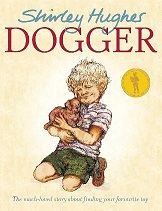
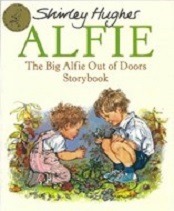
Kate Greenaway Medal winner (Dogger, 1977), author and illustrator Shirley Hughes, is renowned for her contributions to children’s literature. Her warmly observed stories of the everyday joys and challenges of childhood are brought to life on the page with affection and humour. Because they were written decades ago, these stories now give children a glimpse into the childhood of today's parents and grandparents. Children will learn to understand the past through settings, characters and events encountered in Hughes' books noticing similarities and differences between things in the past and now that they can ask their family questions about. Did grandma and grandpa take part in three-legged races or wheelbarrow races at their school sports day? Did they win a prize teddy on the tombola at a school fair? (Dogger, 1977). Did nanny or grandad set up a shop in their back garden, hang a sheet over their washing line to make a tent or turn a fallen tree into a great place to play? (The Big Alfie Out of Doors Storybook, 1992)
KS1/ LKS2
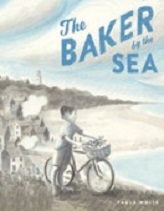
Author and illustrator Paula White grew up by the sea and still lives on the Suffolk coast in the breezy town of Lowestoft. Her children's picture book, The Baker by the Sea, was awarded the 2019 Templar illustration prize. It was also Shortlisted for the Historical Association's Young Quills Historical Fiction Competition.
White's debut picture book is inspired by her grandad Percy and the fishing heritage of her hometown. A lyrical, richly illustrated story, it explores a child's relationship with his seaside fishing town. It provides a rich tale of community and family that offers a rare glimpse into the past whilst reminding children that everyone is important, no matter how seemingly small their role.
A primary school situated on the Lancashire coast used 'Baker by the Sea' to help children paint a picture of the past in their minds before embarking on a local history study based on the fishing industry in Morecambe. Starting with a story ensured that the children became engaged and responsive. The class teacher then used local, oral history sources to enrich the children's learning experience. Catching Tales, a three-year oral history project, has been collecting fishing-related stories and memories. An archive of first-hand accounts from over 50 people, past and present, has now been captured before they’re lost forever. A visit to Morecambe cemetery to look at fishermen graves, and the wooden statue(s) by Tim Burchess, further developed the children's understanding. Burchess' statues of a fisherman and a 'shrimp lady' represent the proud fishing and shrimping heritage of Morecambe, especially Poulton village. Two types of burial are all too common in Morecambe Cemetery: fishermen drowned at sea and infant deaths, the latter often recurring in the same family.
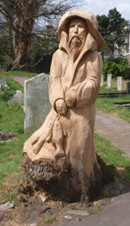
https://www.thetimburgess.com/
UKS2
Guy Fawkes was 'the man who came within a whisker of changing England forever.' The foiling of The Gunpowder Plot was certainly a turning point in British history and, as such, it can provide a compelling story for Key Stage 2 history.

Ally Sherrick's award-winning novel, Black Powder, (2017 Historical Association's Young Quills Historical Fiction Competition for children and young adults. Winner: Under 12s category) turns this significant event into an action-packed life-and-death quest, packed with history and adventure.
Guy Fawkes was born in York in 1570. At that time, it was dangerous to be Catholic. Many plots and rebellions against Elizabeth I were led by Catholics, which led to severe reprisals. Priests who were caught leading secret services were tortured and executed. A devout Catholic, Fawkes’s future took a fateful turn when he met Englishman Thomas Wintour in Spain. Wintour was scouting around for allies to join a group of Catholic conspirators based in England…
Black Powder follows one boy amongst the religious complexities of the time. 12-year-old Tom must save his Catholic father from hanging. He falls in with a mysterious stranger who promises to help him in exchange for his service. But, on the long journey to London, Tom discovers his acquaintances' true mission – a plot to blow up Parliament with barrels of black powder. Tom faces a terrible decision: secure his father’s release or stop the assassination of the king!
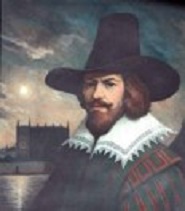
Image: Portrait of Guy Fawkes © St Peter's Foundation
Children may be surprised to learn that Fawkes' compatriots in Europe described him admiringly as: ‘A man of great piety, of exemplary temperance, of mild and cheerful demeanour, an enemy of broils and disputes, a faithful friend, and remarkable for his punctual attendance upon religious observance.’ Black Powder invites children to consider different interpretations of Fawkes and delve into some of the reasons that might lead individuals to revolt against their parliament and monarchy.
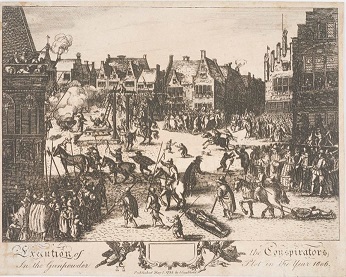
Several Catholic Primary schools in Lancashire have studied The Gunpowder Plot as a part of a sequence of units focussed on the concept of resistance and revolt. Whilst reading 'Black Powder,' the children examined a variety of sources collated by Parliament UK, Historic Royal Palaces and a 1606 etching by Claes (Nicolaes) Jansz Visscher, depicting Fawkes's public execution in Westminster. The Lancashire Archives provided a fascinating local angle to the children's research including a letter, dated 6th November 1606, warning a Lancashire Catholic family about Guy Fawkes' arrest in London. They also looked at a map of Catholic houses in Lancashire, dated 1590, which was seemingly concerned primarily with national security, especially with regard to the continued Catholicism of the Lancashire gentry.
Young Quills Winners 2025
| ||
|
|
|
For readers aged 5-8 years
|
For readers aged 8-11 years
|
For readers aged 11-13 years
|
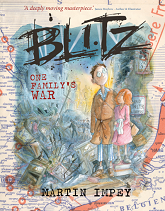
Blitz: One Family’s War by Martin Impey (Ideal for Y2 to Y4)
Blitz: One Family's War is a beautifully illustrated children's book by Martin Impey that tells the poignant story of a family living in London's East End during World War II.
|
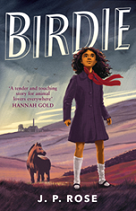
Birdie by P. Rose
When Birdie is sent to live with her great-aunt in 1950s Yorkshire, she befriends the village's last remaining pit pony. A story of hope and courage, exploring themes of family, racism and identity. |
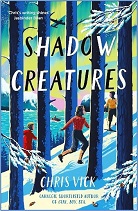
Shadow Creatures by Chris Vick
Inspired by his own family history, Chris Vick has created a vivid and moving account of Norway under occupation, told through the eyes of children Tove and Liva.
|
Resources:
|
Historical Fiction List for the Primary Age Phase
The Young Quills Historical Fiction Awards https://www.history.org.uk/secondary/categories/secondary_quills
VLOG: Developing Reading Fluency in English and the Wider Curriculum
Information about Shirley Hughes https://www.shirleyhughes.com/
Information about Paula White https://www.paulawhiteillustration.co.uk/
Paula White introduces The Baker by the Sea
Catching Tales: Recording Morecambe Bay https://www.recordingmorecambebay.org.uk/content/stories/catching-tales
Tim Burgess: Fisherman Sculpture https://www.thetimburgess.com/portfolio-items/fisherman-morecambe-cemetery/
Children's Author Ally Sherrick
Introducing ... BLACK POWDER by Ally Sherrick https://www.youtube.com/watch?v=yACTm3oz1ss
Steven Kenyon interviews award-winning, historical fiction author, Ally Sherrick https://www.youtube.com/watch?v=xz0UqSf9Aa4
Guy Fawkes and bonfire night https://learning.parliament.uk/en/resources/guy-fawkes-and-bonfire-night-video/
Execution of the conspirators in the Gunpowder Plot in the Year 1606 by Claes (Nicolaes) Jansz Visscher https://www.londonmuseum.org.uk/collections/search/?q=Caulfield%2C+James%2C+Visscher%2C+Claes+Jansz. (You are welcome to download and use this image for free under Creative Commons Licence)
Guy Fawkes and the Gunpowder Plot https://www.hrp.org.uk/tower-of-london/history-and-stories/guy-fawkes-and-the-gunpowder-plot/
|
Steven Kenyon is a member of the Historical Association Primary National Committee. He regularly speaks at the national conference. He has taught in several primary schools and, for the last eight years, has been a Teaching and Learning Consultant in Primary History and English. For the past six years, Steven has also been a judge for the Historical Association's Young Quills Awards for Best Historical Fiction for Young People.